
Introduction
The way we consume coffee has changed dramatically over the past two decades. Gone are the days when most households relied solely on traditional drip coffee makers that brewed full pots regardless of need. Today’s coffee drinkers have access to a variety of technologies designed to deliver convenience and customization in a single cup. Single-serve coffee makers have become increasingly common in kitchens across North America, and for understandable reasons—they address real problems that traditional brewing methods don’t fully solve.
One of the persistent challenges for coffee enthusiasts is the tension between quality and convenience. Someone might want a fresh cup of coffee without the commitment of brewing an entire pot that sits warming on a hotplate. Others live in shared spaces or have household members with different beverage preferences, making individualized brewing a practical necessity. The TWOMEOW K-Cup coffee maker represents one approach to solving this particular equation, offering flexibility in both the type of coffee used and the final drink temperature.
Understanding what this machine does well—and what to realistically expect from it—requires looking beyond marketing language and focusing on how single-serve systems actually work and fit into different lifestyles.
Key Features and Technical Specifications
The TWOMEOW single-serve system combines several design elements that distinguish it within the competitive landscape of pod-based and grounds-compatible coffee makers. Here’s what you should know about its core functionality and design.
Dual Brewing Compatibility
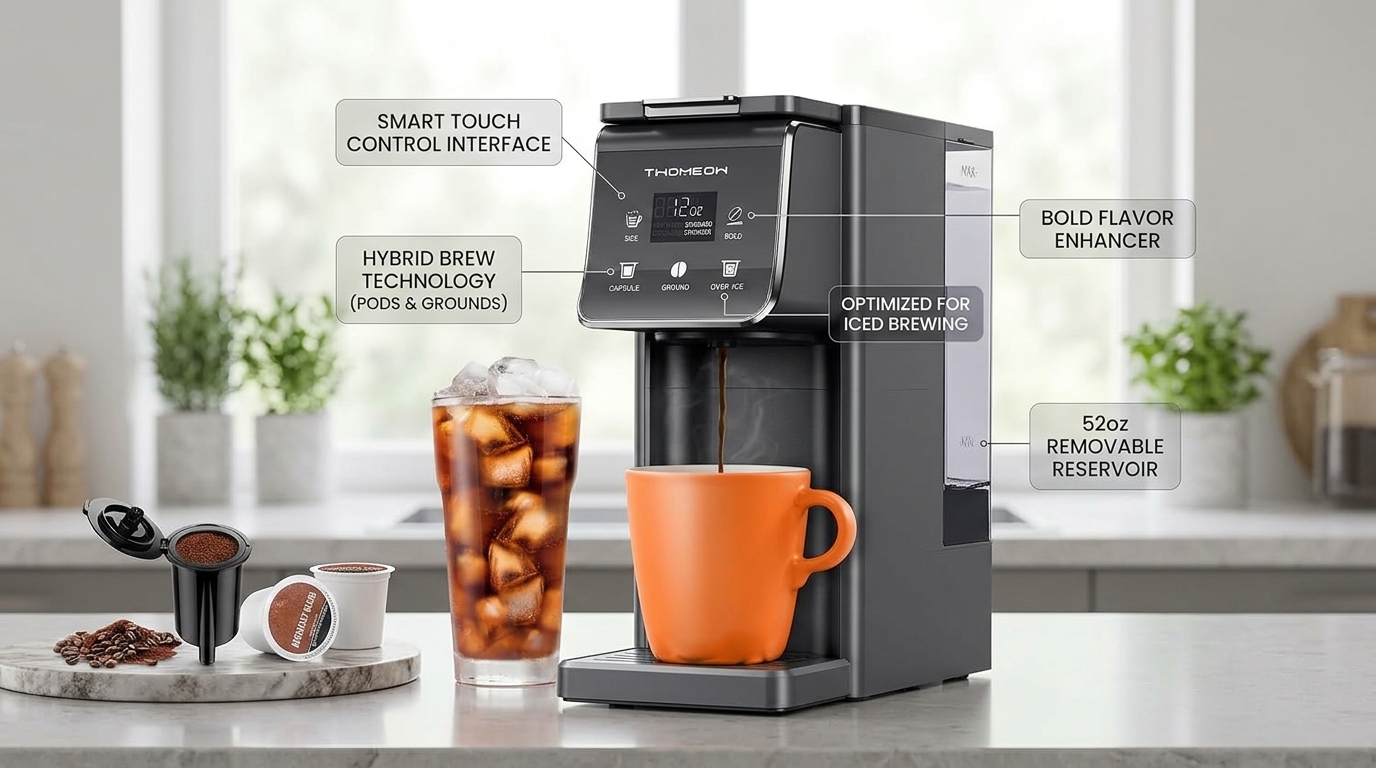
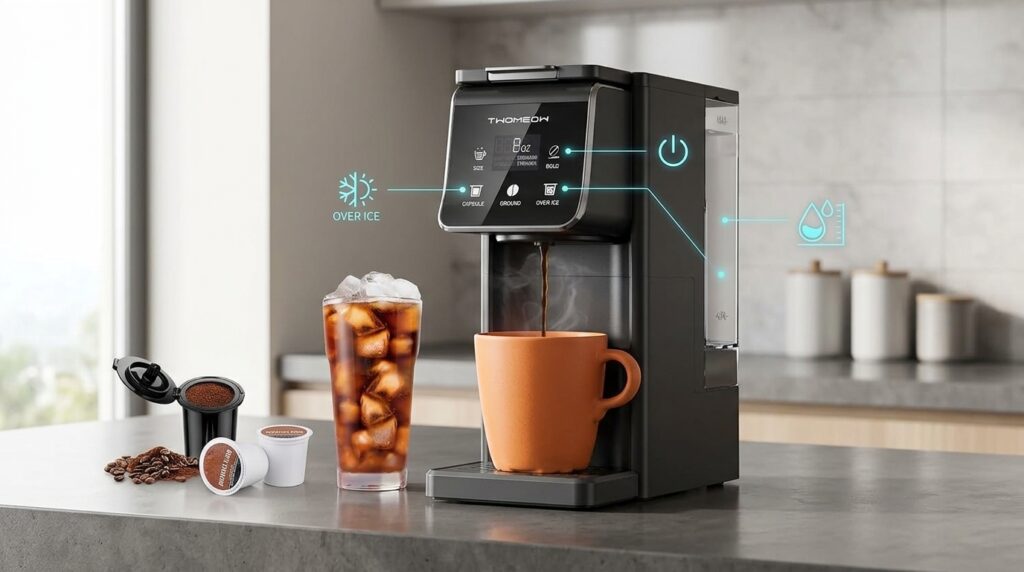
This machine accepts both K-Cup pods and loose ground coffee, a feature that matters more than it might initially seem. K-Cup pods offer consistency and convenience—each pod is pre-measured and packaged to brew a single serving. However, they also represent an ongoing expense and generate plastic waste. The ability to use ground coffee addresses both concerns, allowing users to source their own beans from local roasters or purchase bulk coffee, then grind it at their preferred coarseness. This flexibility means the machine adapts to different priorities: speed and simplicity on some mornings, cost-effectiveness and customization on others.
Reservoir Capacity and Design
The 52-ounce removable reservoir sits above the brewing mechanism and holds enough water for multiple cups without requiring constant refilling—though the exact number of refills depends on cup size. The removable design simplifies cleaning and refilling, a consideration that matters for daily-use appliances that accumulate mineral deposits and residue over time. This capacity positions it between ultra-compact single-cup brewers and full-sized drip machines, making it practical for individuals or small households without demanding excessive counter space.
Bold Brew Setting
The incorporated bold setting adjusts the brewing parameters to extract more flavor and caffeine from either K-Cups or grounds. This feature addresses a common complaint about single-serve brewers—that they sometimes produce weaker coffee than users prefer. The mechanism typically works by either extending the contact time between water and grounds or adjusting water temperature, though the specific method varies by model. For users who prefer stronger coffee without adding extra pods or grounds, this represents a meaningful customization option.
Hot and Iced Beverage Capability
Beyond heating water for hot coffee, this machine can brew directly over ice to create iced beverages. This functionality matters because it expands the product’s utility across seasons and personal preferences. Rather than brewing hot coffee and then waiting for it to cool, or brewing over ice haphazardly, the machine accounts for ice volume and adjusts brewing parameters accordingly. This means iced beverages brewed this way typically taste more balanced than improvised alternatives.
How This Type of Coffee Maker Actually Works in Practice
Single-serve systems like the TWOMEOW operate through a straightforward but engineered process. Water from the reservoir flows through a heating element that brings it to the appropriate temperature—typically around 195-205 degrees Fahrenheit, which is ideal for coffee extraction. This heated water then passes through either a K-Cup pod or grounds held in a compatible brewing basket, depending on which brewing method you’ve selected. The brewed coffee drips directly into a waiting mug or cup positioned on the drip tray below.
The experience differs from traditional drip brewing in several important ways. First, the process is faster—most single cups brew in two to four minutes, compared to five to ten minutes for a full pot. Second, the coffee maker remains idle between uses rather than heating a full carafe continuously. Third, you’re making exactly what you need rather than gambling on how much coffee you’ll actually consume.
The practical implications matter. Someone rushing to work can have hot coffee in hand within minutes. A person working from home can brew a fresh cup mid-afternoon without the commitment of a full pot. In households where one person drinks coffee and another doesn’t, the machine eliminates the awkwardness of partial pots.
However, the single-serve format also means slightly higher per-cup costs compared to traditional brewers when using K-Cup pods (though lower when using grounds), and it occupies permanent counter space for a single function.
Practical Usage Scenarios
Different household situations benefit from single-serve brewers in different ways. Understanding whether this machine suits your particular circumstances requires thinking through how you actually consume coffee.
Daily Commuter Scenario
Someone who wakes up, makes coffee, and leaves quickly benefits from the speed and simplicity. There’s no waiting for a full pot to brew, and no leftover coffee to waste. The machine can be programmed for specific cup sizes, and the process is intuitive enough to execute on autopilot before caffeine intake.
Remote Worker at Home
A person working from home might brew three or four cups throughout the day, often at irregular intervals. A single-serve brewer eliminates the pattern of brewing full pots that cool while untouched, then being discarded. It also means fresh coffee available whenever focus flags, rather than reheating yesterday’s brew.
Shared Living Situation
Roommates or family members with different schedules and preferences can each brew what they want when they want it. One person might prefer bold hot coffee in the morning while another wants iced coffee in the afternoon. The machine accommodates both without negotiation or waste.
Entertaining Small Groups
Rather than managing a traditional coffee service, a host can offer guests immediate, fresh coffee brewed to individual preferences. The process becomes interactive rather than logistical.
Who Might Find This System Suitable
Identifying whether this machine matches your lifestyle requires honest assessment of your actual coffee consumption patterns, not idealized versions.
Coffee enthusiasts with flexibility about brewing methods: People who prioritize having good coffee available but aren’t religiously committed to a single brewing approach benefit from dual compatibility. The option to use K-Cups on rushed mornings and switch to premium ground coffee on weekends provides genuine flexibility.
People in small households or living alone: When you’re brewing for one or two people regularly, the single-serve format makes economic and practical sense. There’s no waste, and the machine handles diverse preferences naturally.
Those concerned about coffee freshness: If you dislike day-old coffee and the alternative of daily cleaning a traditional brewer appeals to you, single-serve systems resolve this concern efficiently.
Space-conscious individuals: The footprint of a single-serve brewer is significantly smaller than most drip machines, making it suitable for compact kitchens, offices, or dorm rooms where every inch matters.
People who value convenience over absolute lowest per-cup cost: If you’re willing to spend slightly more per cup in exchange for speed, simplicity, and customization, this category of machine serves that priority.
Important Considerations Before Deciding
Honest evaluation requires acknowledging limitations and tradeoffs, not just benefits.
K-Cup Expenses and Waste
Using K-Cup pods exclusively represents a genuine ongoing expense. A pod typically costs between fifty cents and two dollars depending on quality and sourcing, compared to around fifteen to twenty-five cents per cup using ground coffee. Over a year of daily use, the difference accumulates meaningfully. Additionally, while K-Cup manufacturers have improved recyclability, pods still represent more waste than bulk coffee and filters. Using the grounds-compatible feature addresses this concern but requires the added step of grinding and filling brewing baskets—the convenience advantage diminishes when you’re not using pods.
Learning Curve for Grounds Brewing
While using K-Cups is genuinely foolproof, brewing with loose grounds involves variables: grind size, the amount of grounds used, and how firmly they’re packed into the basket. Getting consistently good results requires either trial and error or accepting that quality might vary. People who appreciate the simplicity of standardized pods might find this step troublesome.
Counter Space Permanence
Single-serve brewers claim permanent real estate on your counter. If you’re someone who prefers minimal appliances visible, or if counter space is genuinely scarce, this represents a meaningful commitment.
Water Quality Matters
The machine concentrates the effects of water quality on your final coffee. If your tap water is particularly hard, heavily chlorinated, or otherwise problematic, you’ll likely benefit from using filtered or bottled water. A few brewers include water filters, but descaling still becomes necessary periodically.
Heating Speed
While faster than traditional brewers, the machine does require time to heat water to proper temperature on first use each day. This isn’t instantaneous, though it’s typically faster than an electric kettle.
How Single-Serve Brewers Compare to Other Coffee-Making Methods
Understanding where this technology fits among broader options clarifies whether it’s genuinely right for you.
Versus Traditional Drip Machines
Drip brewers excel at producing multiple cups efficiently and maintaining a low per-cup cost when amortized across a full pot. They work reliably, require minimal maintenance, and have been perfected over decades. The tradeoff is that you’re committed to brewing a full pot, and once brewed, the coffee gradually degrades as it sits on a warming plate. Single-serve machines avoid this degradation and waste but cost more per cup when using pods.
Versus Pour-Over Methods
Pour-over brewing—using devices like Chemex, Kalita, or Melitta—provides exceptional control over brewing variables and produces excellent coffee in the hands of someone who cares about technique. The tradeoff is that this method is manual and slower, requires constant attention, and assumes you care enough about coffee to engage with the process deliberately. Single-serve brewers are for people who want good coffee quickly without learning technique.
Versus Espresso Machines
Espresso machines create a fundamentally different product—concentrated shots that form the base for lattes, cappuccinos, and other beverages. They’re substantially more complex, expensive, and require practice to operate well. Single-serve brewers make regular coffee, not espresso, despite what some marketing might imply. The two serve completely different purposes.
Versus Instant Coffee or Cold Brew Concentrate
Instant coffee and cold brew concentrate represent the ultimate in convenience—brew time is essentially zero. The tradeoff is that many people find the taste profile less satisfying than freshly brewed coffee. Single-serve machines split the difference: slightly more work than instant, slightly less time than traditional brewing.
Frequently Asked Questions
How long does each cup actually take to brew?
From the moment you start the brew cycle, expect two to four minutes for completion, depending on cup size and whether you’re using the bold setting. However, if the machine has been idle and needs to heat water initially, add another minute or so. This is considerably faster than most traditional methods.
Do I need to descale it, and how often?
Yes, mineral buildup from tap water naturally occurs in all heating-based coffee makers. The frequency depends on your water hardness—anywhere from monthly to quarterly for most users. Descaling involves running a descaling solution through the machine according to instructions. It’s a minor maintenance task that takes fifteen minutes, not a major undertaking.
Can I use my own ground coffee if I don’t have the special brewing basket?
Most K-Cup compatible brewers can be used with the provided reusable filter basket, which accepts ground coffee directly. If the machine didn’t ship with one, they’re typically available as inexpensive accessories. This is where you get the cost benefit of bulk coffee.
Does the bold setting make a huge difference?
The bold setting does produce noticeably stronger coffee—more caffeine and more pronounced flavor extraction. Whether this matters depends on personal preference and the quality of coffee being used. It’s not a magic solution for poor-quality grounds, but it meaningfully improves the result with good coffee.
Will this work if I want to make iced coffee?
Yes, the iced brewing feature is specifically designed for this. The machine accounts for ice volume and adjusts the brew accordingly. Pour your ice into the cup first, place it on the drip tray, and select the iced option. The result is properly balanced iced coffee, not hot coffee poured over ice.
What’s the warranty and what does it cover?
Specific warranty details vary by retailer and purchase date, but most single-serve brewers come with a one-year manufacturer warranty covering defects in materials or workmanship. It typically doesn’t cover damage from improper use, descaling failures, or normal wear. Check the documentation that comes with your machine for exact details.
Can I use it if my water quality is poor?
You can, but you might want to use filtered or bottled water. Hard water or chlorinated water will still produce drinkable coffee, but it may taste better with filtered water, and mineral buildup will still occur. Some people find the difference substantial; others don’t notice much impact.
Is it loud?
Single-serve brewers are generally quieter than full-sized drip machines or espresso machines, but they’re not silent. Expect ambient noise level—around 70-75 decibels during the brew cycle. This is unlikely to disturb someone in another room but will be noticeable if you’re standing right next to it.
Conclusion
The TWOMEOW K-Cup coffee maker represents a practical tool for people whose lifestyles align with single-serve brewing. It addresses real problems—waste from full pots, time spent waiting for brewing, difficulty accommodating different preferences in shared spaces—without requiring significant learning or skill development.
The machine’s dual compatibility with K-Cups and ground coffee provides genuine flexibility, moving it beyond the limitations of pods-only systems. The bold setting and iced brewing capability expand the range of beverages it can produce. The 52-ounce reservoir balances capacity with compact design.
Whether this machine makes sense for your kitchen depends on honest assessment of how you actually consume coffee, not how you imagine consuming it. Someone who drinks coffee occasionally and rarely the same way twice might find it overkill. Someone who drinks multiple cups daily in a shared household with diverse preferences might wonder how they lived without it.
The best approach is recognizing that no single brewing method is objectively superior—each represents different priorities. Single-serve machines prioritize speed, convenience, and reduced waste over the lowest per-cup cost or maximum customization. If those priorities match your reality, this category of machine delivers genuine value.