
Introduction
The modern coffee drinker faces an interesting dilemma. On one hand, there’s the desire for convenient, quick caffeine delivery. On the other hand, many people appreciate the ritual and quality of a thoughtfully brewed cup. For those seeking a middle ground—efficiency without entirely sacrificing preference—single-serve coffee makers have become increasingly popular in households across North America.
The single-serve category has evolved significantly since its initial introduction to the market. What began as a relatively narrow niche of pod-based brewing has expanded to include machines that accommodate multiple brewing methods, accommodate different cup sizes, and fit into various kitchen spaces. Understanding what these machines offer, their practical applications, and what realistic expectations to hold can help you determine whether this style of brewing aligns with your coffee routine.
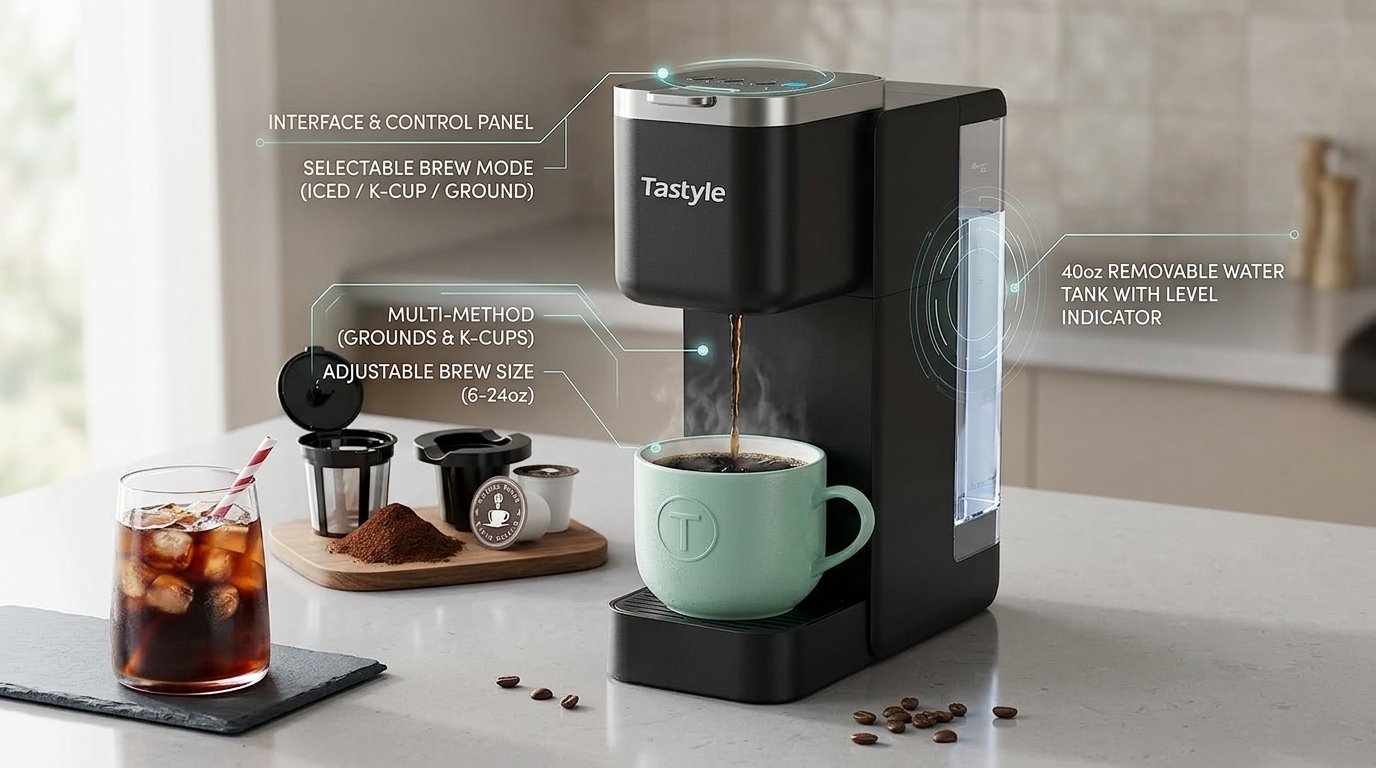
This guide explores the features, functionality, and practical considerations surrounding single-serve coffee makers, specifically examining the characteristics and capabilities of the Tastyle model that combines K-Cup compatibility with ground coffee brewing flexibility. Whether you’re replacing an aging coffee maker, downsizing your kitchen setup, or simply exploring options that might work better with your lifestyle, this comprehensive overview provides the information needed to make a thoughtful decision.
Understanding Single-Serve Coffee Technology
Before diving into specific features, it’s worth understanding what defines this category of coffee makers and why the design choices matter.
Single-serve brewers emerged from the recognition that not every household member drinks coffee at the same time, in the same volume, or with the same preferences. Traditional drip coffee makers brew anywhere from eight to twelve cups simultaneously, which works efficiently for households where multiple people are caffeinating at once. However, for individuals living alone, working from home, or managing different schedules, brewing a full pot results in wasted coffee that may sit and deteriorate.
Single-serve systems address this by preparing individual servings on demand. This approach offers practical advantages: minimal waste, the ability to experiment with different brewing parameters for each cup, and the elimination of leftover coffee sitting on a warming plate. However, like any appliance category, single-serve systems involve trade-offs related to cost per cup, environmental considerations with certain brewing methods, and space requirements on your countertop.
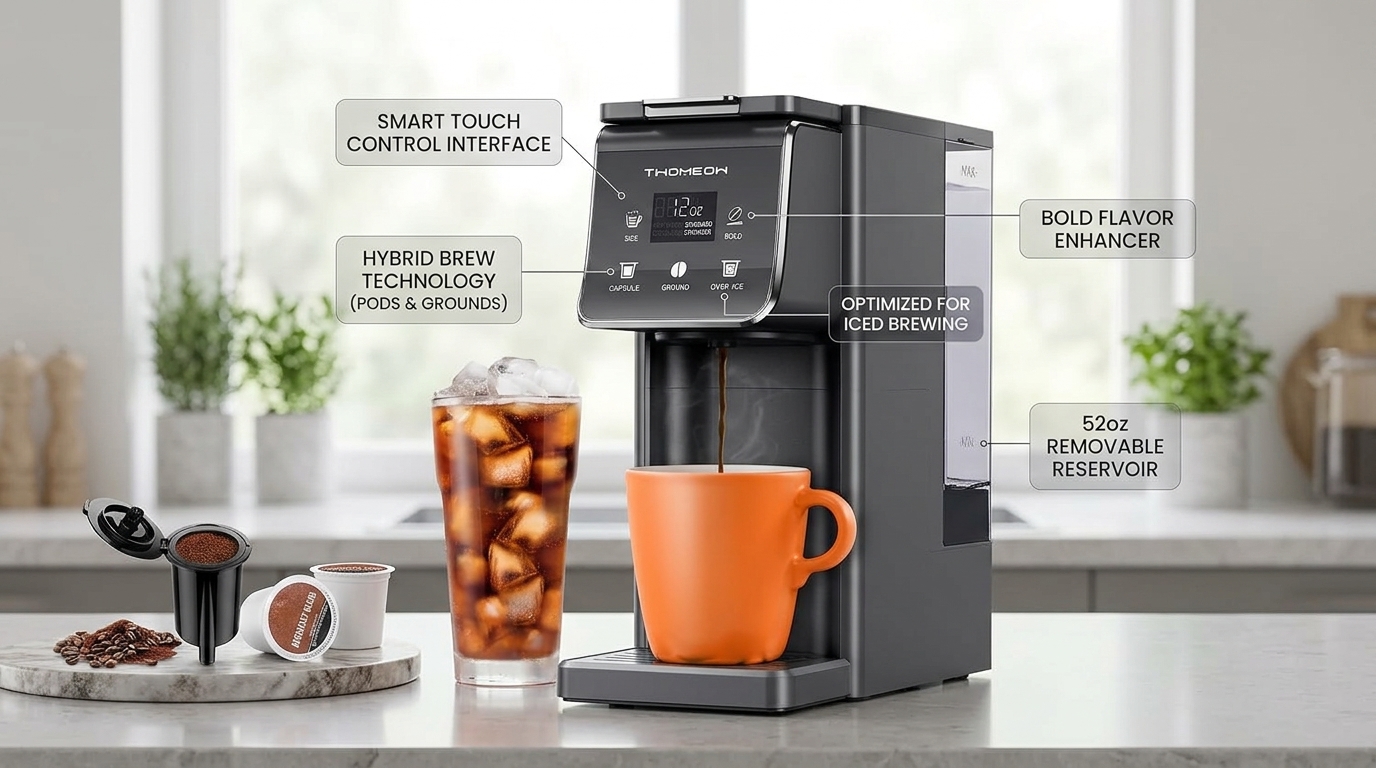
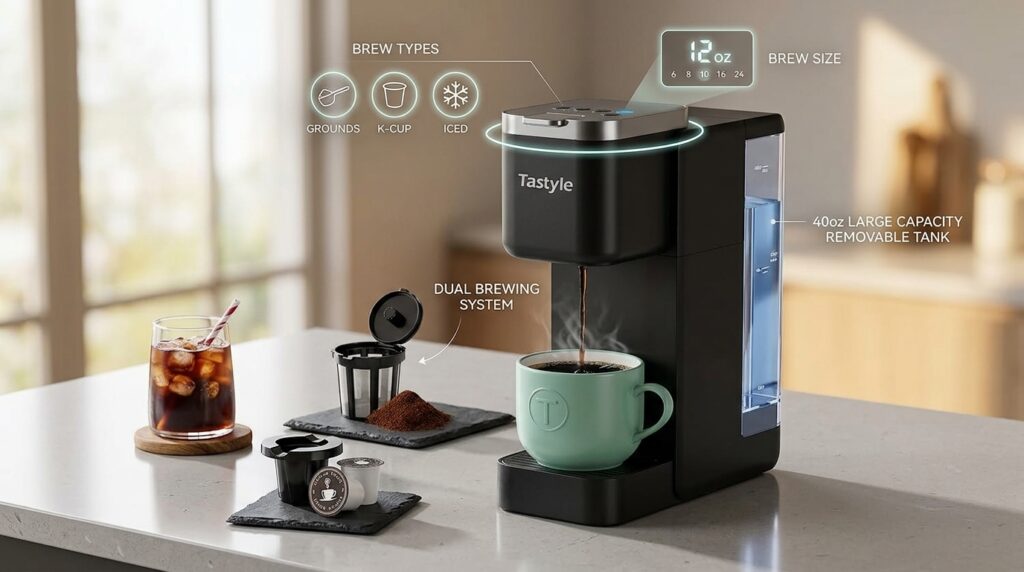
The Tastyle model sits within this landscape as a machine designed to provide flexibility—accommodating both pre-packaged pods and loose grounds—with multiple brewing strength options in a compact footprint. This hybrid approach appeals to people who want options rather than commitment to a single brewing method.
Key Features and What They Mean
Multiple Brewing Methods
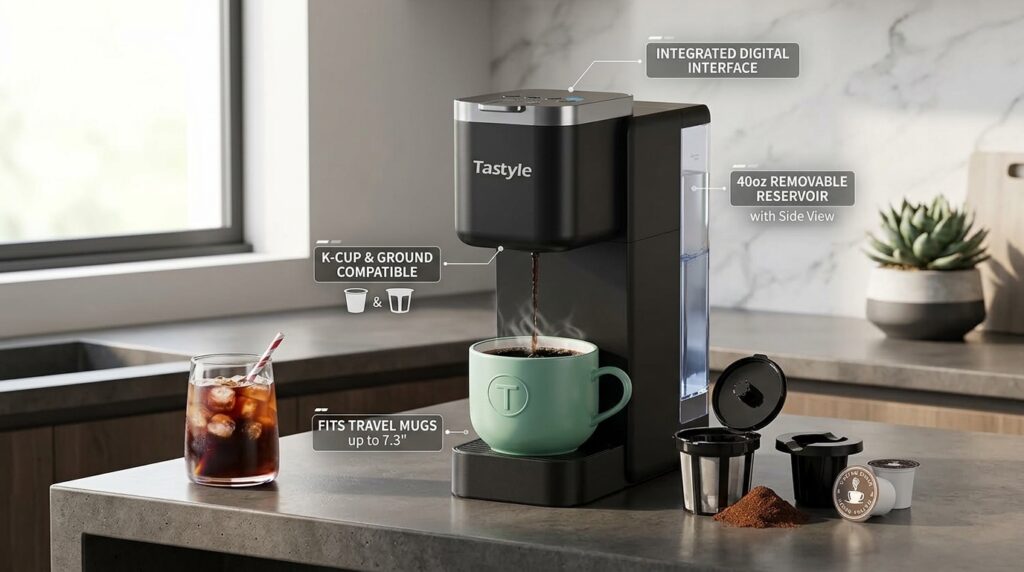
The ability to use both K-Cup pods and ground coffee represents a significant feature that distinguishes this model from machines locked into a single brewing approach. Understanding what this flexibility means in practical terms is valuable.
K-Cup pods offer convenience and consistency. Each pod contains a pre-measured amount of coffee, sealed for freshness, and designed to deliver a standardized extraction. This method minimizes the variability that comes with measuring and tamping grounds manually. For people with busy mornings or those who travel frequently, this convenience has appeal. Additionally, the range of flavors and roasts available in pod form continues to expand, allowing experimentation without purchasing full bags of beans.
Ground coffee brewing, conversely, offers different advantages. Many coffee enthusiasts prefer the control that comes with selecting their beans, determining grind size, and understanding the specific coffee they’re using. Ground coffee brewing typically offers better value if you purchase beans in larger quantities and grind them yourself. There’s also an environmental consideration, as reusable filters can reduce the disposable pod waste associated with single-use capsules.
The Tastyle’s accommodation of both methods means you’re not locked into one approach. You might use pods on weekday mornings when efficiency matters most, then experiment with ground coffee on weekends when you have more time to engage with the brewing process. This flexibility responds to the reality that coffee preferences and available time aren’t constant.
Brew Size Range
The 6-ounce to 24-ounce brew capacity addresses a practical reality often overlooked in coffee machine discussions: people drink different volumes. A 6-ounce cup represents a concentrated, espresso-adjacent serving that some prefer. The 24-ounce capacity accommodates travel mugs or anyone who simply prefers a larger serving in the morning. Rather than forcing users into a one-size-fits-all approach, this range acknowledges individual preference.
The practical implication is flexibility. On days when you’re in a hurry and want a quick hit of caffeine before heading out the door, six ounces might suffice. On weekend mornings when you’re settling in with a book or working on a project, a larger serving makes sense. This adaptability means the machine doesn’t waste water brewing more than you need, nor does it require multiple brewing cycles when you want a larger volume.
Three Brew Styles
The inclusion of multiple brew strength options—labeled as three distinct styles—suggests the machine offers settings that alter extraction time or water temperature. Most single-serve brewers offer at least two strength options, with “strong” delivering more robust flavor extraction and regular or mild options providing lighter cups. The specific mechanism varies by machine: some extend brew time, others adjust water temperature, and some use different brewing pressure profiles.
The practical value here depends on your preferences and what you’re brewing. If you consistently prefer one strength level, this feature matters less to your daily experience. However, if household members have different preferences, or if you switch between different coffee types based on time of day or mood, the ability to adjust this parameter without changing your brewing method or pod choice offers convenience.
Water Tank Capacity
The 40-ounce removable water tank represents a design choice that balances capacity with manageability. Forty ounces translates to approximately five eight-ounce cups worth of brewing capacity without refilling. For an individual or a couple, this capacity means you can brew two to four cups before replenishing the tank, depending on your preferred serving size.
The removable tank design is significant for two reasons. First, it simplifies cleaning—you can remove the tank, rinse it thoroughly, and ensure no mineral buildup or lingering flavors accumulate. This contributes to maintenance and the quality of water that contacts your coffee. Second, it makes refilling more convenient than machines where you pour water into a small fill hole at the top. With a removable tank, you can take it to the sink and refill at your own pace.
For people in hard water areas, the ability to easily access and clean the water tank becomes particularly relevant, as mineral deposits accumulate more rapidly in high-mineral-content water.
Compact Design and Spatial Considerations
The notation that the machine “fits 7.3 inches” refers to its width or footprint, indicating it occupies relatively minimal counter space. In increasingly common small-kitchen scenarios—studio apartments, RVs, office spaces, dorm rooms—spatial efficiency matters. A coffee maker that occupies four square feet of counter real estate creates different constraints than one requiring a smaller footprint.
The compact design philosophy influences other aspects of the machine. It affects how the water tank is positioned, the brewing chamber’s size and accessibility, and the overall user interface. Understanding your available counter space before evaluating any appliance ensures the machine actually works within your environment.
How These Machines Fit Into Different Routines
Single-serve coffee makers serve different purposes depending on life circumstances and priorities. Examining several scenarios provides clarity about whether this brewing approach aligns with your needs.
Weekday Mornings and Time Constraints
For people with demanding morning schedules, the appeal of single-serve brewing centers on speed and simplicity. You wake up, pop in a pod or fill the grounds basket, press a button, and within minutes have a hot beverage. There’s no waiting for a full pot to brew, no dealing with leftover coffee, no complex cleanup. This matters for people who consider coffee a functional necessity rather than a centerpiece of their morning ritual.
Working from Home Scenarios
When your workplace is also your home, having a coffee maker that brews on demand becomes distinctly valuable. Rather than brewing a full pot at 7 AM that sits until 10 AM, you can brew fresh coffee each time you want it throughout the day. This approach ensures every cup tastes fresh and hot. It also prevents the phenomenon of finishing half a pot, forgetting about the remainder, and discovering stale coffee hours later.
Solo Living and Minimal Waste
Single-person households represent an obvious fit for single-serve brewing. When only one person will drink the coffee, brewing eight to twelve cups simultaneously guarantees waste. A single-serve machine lets you brew exactly what you’ll consume, with no leftover coffee to pour down the sink the next morning.
Households with Different Preferences
Interestingly, multi-person households with varying coffee preferences also benefit from single-serve machines. Rather than compromise on a shared pot—where one person prefers a very strong dark roast and another wants a lighter blend—each person can brew according to their preference. The strong/mild setting options accommodate this preference variation.
Experimenting and Learning About Coffee
For people interested in exploring different roasts, origins, and brewing methods, single-serve machines with ground coffee capability provide a low-commitment way to experiment. You can purchase small quantities of different beans, try them individually, and determine what you actually prefer, rather than committing to five-pound bags of coffee you’re uncertain about.
Who These Machines Serve Well
Certain living situations and personal preferences align particularly well with single-serve brewing.
Individuals living alone benefit most directly from the efficiency and waste-reduction aspects. These machines are designed with single servings as the baseline, so everything from portion sizes to tank capacity works optimally for solo use.
Busy professionals appreciate the time savings and consistency. When your morning involves juggling multiple priorities, a two-minute coffee brewing cycle with no additional cleanup burden appeals to efficiency-focused people.
People in small living spaces value the compact footprint. Dorm residents, apartment dwellers in urban areas, or anyone with limited counter space can accommodate a single-serve brewer where a full-size drip machine wouldn’t fit.
Shift workers and non-traditional schedules benefit from the on-demand brewing capability. If you’re arriving home at 3 PM or waking up at midnight for work, brewing a single serving when you need it—rather than relying on a communal pot—serves the reality of non-standard schedules.
People with variable consumption are well-served by machines offering different brew sizes. If some mornings you want six ounces and other mornings you want twenty-four, this flexibility prevents waste.
Environmentally conscious consumers may appreciate single-serve machines that accommodate reusable filters for ground coffee. While single-use pods receive criticism for waste, the option to use ground coffee provides an alternative that aligns with sustainability values.
Important Considerations and Realistic Expectations
Understanding what single-serve coffee makers do well requires also acknowledging their limitations and the trade-offs inherent in choosing this brewing method.
Cost Per Serving
The per-cup cost of single-serve brewing—particularly with pre-packaged pods—often exceeds the cost of traditional drip coffee makers when calculated over time. A K-Cup pod typically costs between forty cents and one dollar per cup, depending on where you source them. Ground coffee brewed in bulk, whether in a traditional drip maker or French press, often costs substantially less per serving. If cost-per-cup is a primary concern, this brewing method may not represent the most economical choice.
Environmental Impact
The single-use pod conversation continues to generate discussion in coffee communities. While convenient, K-Cups create a disposal consideration. Some companies have developed compostable or recyclable pods, and recycling programs exist in certain areas, but this remains a legitimate environmental consideration for conscientious consumers. Using the ground coffee brewing function with a reusable filter mitigates this concern but requires more involvement than grabbing a pod.
Cleaning and Maintenance
Single-serve machines require regular cleaning to prevent mineral buildup, mold, or flavor transfer between brewing sessions. The compact design that saves counter space sometimes makes maintenance more involved, as components are tightly arranged. Understanding the specific cleaning requirements and maintenance schedule before purchasing ensures you’re comfortable with the involvement level.
Brewing Quality Expectations
Single-serve machines offer convenient brewing, but they don’t necessarily produce the most sophisticated cup of coffee possible. Coffee enthusiasts who’ve invested in grinders, pour-over methods, or espresso machines will likely find that single-serve brewing represents a compromise on quality for the sake of convenience. This isn’t a criticism—it’s a recognition that you’re optimizing for different priorities (speed and ease) than maximum flavor extraction.
Water Quality Matters
Because these machines use relatively small amounts of water for each cup, water quality becomes more noticeable than in traditional drip coffee makers. If you have hard water or experience mineral accumulation, you may notice faster buildup and more frequent cleaning requirements. Using filtered water helps, but this adds a small ongoing cost.
Limited Capacity for Large Gatherings
If you frequently host gatherings where ten people want coffee simultaneously, a single-serve machine designed for on-demand brewing isn’t practical. These machines optimize for individual or dual serving scenarios, not high-volume entertaining.
Understanding the Competitive Landscape
Single-serve coffee makers occupy a broad category with numerous manufacturers and models. Understanding how different approaches compare helps contextualize where any particular model sits.
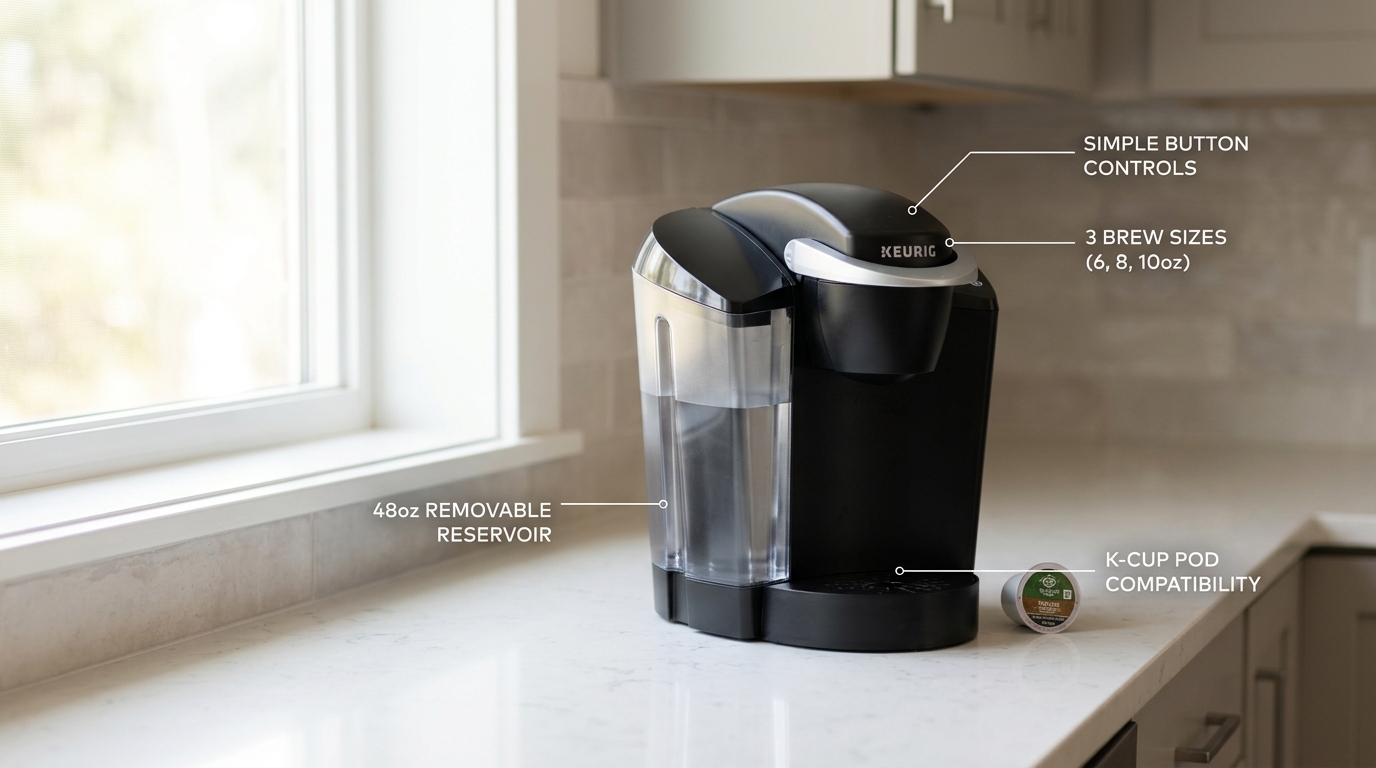
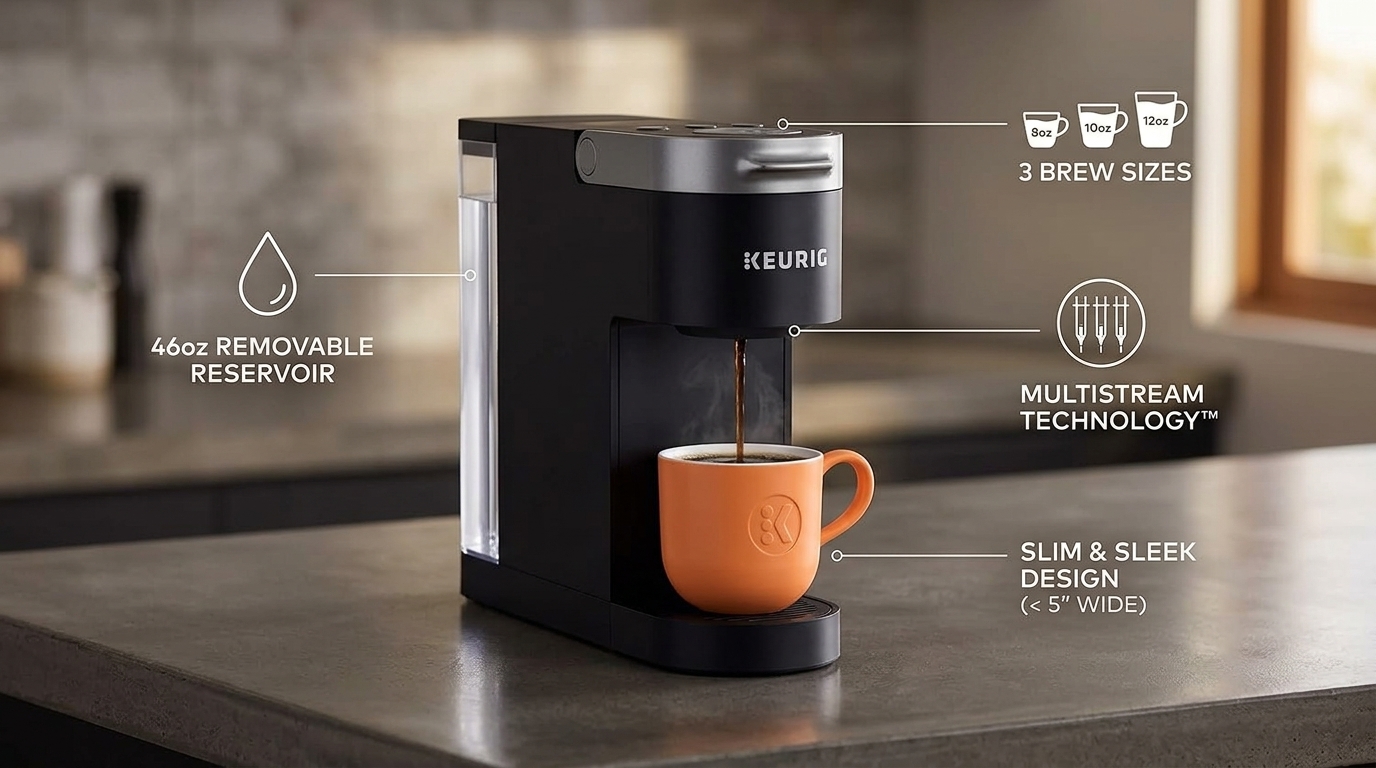
Pod-exclusive machines lock users into purchasing pre-packaged pods from specific manufacturers. While convenient, this creates ongoing dependencies and choice constraints. The flexibility to also brew ground coffee represents a differentiation from these single-method machines.
Grind-and-brew machines specifically designed for ground coffee only often excel at extraction quality but lose the convenience factor of pod usage. The hybrid approach splits the difference.
High-end single-serve models from premium manufacturers sometimes include temperature controls, pressure profiling, or other variables that appeal to coffee enthusiasts willing to pay more for complexity. Compact models emphasizing simplicity and affordability represent a different market segment.
Standard drip coffee makers with smaller capacities (four to six cup models) provide an alternative worth considering. They brewed volume at once rather than on-demand, but some people find the simplicity appealing.
Manual brewing methods like pour-over or French press appeal to coffee enthusiasts but require more hands-on involvement than any automatic machine.
The choice between these options involves weighing convenience, cost, coffee quality, environmental impact, and the time you’re willing to invest in the brewing process. Single-serve machines with hybrid brewing methods appeal specifically to people who want flexibility without committing to a single approach.
Frequently Asked Questions
How long does a typical brewing cycle take?
Most single-serve machines complete a brewing cycle in one to three minutes, depending on the selected brew strength and size. The actual brewing time—once the machine has heated water—typically takes one to two minutes. The bulk of this time goes to water heating if the machine isn’t already at operating temperature.
What kind of ground coffee works best?
Medium to finely ground coffee generally works well in single-serve brewers designed for grounds. The ground coffee basket typically has a specific design that affects ideal particle size. Grinding your own beans just before brewing produces the best flavor, but pre-ground coffee works if that’s more convenient.
How often does the machine need cleaning?
A thorough cleaning should happen at least monthly, though more frequent cleaning (weekly) improves flavor and prevents mineral accumulation. A quick rinse of the brewing chamber and basket between uses prevents coffee residue buildup. Deep cleaning—descaling the internal components to remove mineral deposits—depends on your water hardness.
Can you brew larger volumes at once?
The machine is designed to brew one serving at a time. If you want eight ounces, it brews eight ounces. If you want twenty-four ounces, it brews twenty-four ounces. You cannot brew multiple cups simultaneously, though you can brew consecutively if you refill the water tank.
What’s the difference between the three brew styles?
This varies by specific machine design, but “strong” typically extends the contact time between water and coffee, resulting in greater extraction and more pronounced flavor. Mild settings reduce extraction time for a lighter cup. Regular falls in between. The exact mechanism—whether through brew time, temperature, or pressure—depends on the machine’s engineering.
Are K-Cups recyclable?
Many K-Cups are recyclable, but programs vary by location. Check with your local recycling facility regarding their policies. Some cups are recyclable if the aluminum portion is separated from the plastic filter; others have specific collection programs. Compostable pods exist as an alternative, though they have their own environmental considerations.
What’s the difference between a K-Cup and a K-Cup-compatible pod?
K-Cup refers to the specific design by Keurig, while K-Cup-compatible describes third-party pods that fit the same brewing system. Many manufacturers produce compatible pods that may cost less or offer different flavor options than the original brand.
Do you need special water or filters?
Using filtered water extends the machine’s lifespan and improves taste, but tap water works. Many people use basic pitcher filters or faucet-mounted filters. Some machines accept water filters in the tank, but this is model-specific.
How much counter space does this actually take?
With a footprint that fits within 7.3 inches in width, these machines typically occupy roughly the space of a toaster—small enough for most kitchen configurations but large enough to be noticeable. Measure your available space before purchasing.
Practical Tips for Single-Serve Brewing
If you’re considering this approach to coffee making, a few practical strategies enhance the experience.
Use filtered water to extend machine lifespan and improve taste. Even an inexpensive pitcher filter improves water quality in most areas.
Establish a regular cleaning schedule before you buy the machine, building it into your routine. Monthly deep cleaning prevents problems; weekly rinsing prevents flavor transfer.
Experiment with both brewing methods—pods and grounds—before deciding which you prefer. You might discover that pods work best for weekday mornings while ground coffee suits weekend brewing.
Keep a small supply of both pods and ground coffee on hand. This ensures you always have options if you run out of your preferred method.
Store K-Cups in a cool, dry place away from direct sunlight. Temperature and humidity fluctuations can affect the coffee inside.
Grind whole beans just before brewing if you use ground coffee. Pre-ground coffee oxidizes quickly, so fresh-ground produces noticeably better results within the first week or two.
Conclusion
Single-serve coffee makers represent a legitimate category of brewing technology that solves real problems for certain users: minimizing waste in solo households, accommodating varied preferences in multi-person homes, enabling quick brewing on busy mornings, and fitting into small kitchen spaces. They involve trade-offs—cost per cup is typically higher, environmental impact requires consideration if you use pods, and they don’t produce the most sophisticated cup of coffee possible.
The Tastyle model specifically addresses the question of method flexibility by accommodating both K-Cup pods and ground coffee, along with adjustable brew sizes and strength options. This flexibility appeals to people who don’t want to commit to a single brewing approach and who value the option to adjust their method based on circumstances and mood.
Whether this type of machine makes sense depends on your specific situation. If you live alone with a busy schedule, value flexibility, and don’t mind paying a slight premium for convenience, it warrants serious consideration. If you’re primarily concerned with cost-per-cup and coffee quality, or if you frequently brew for large groups, other approaches might better serve your needs.
The key to a satisfying coffee machine purchase involves honest assessment of your actual usage patterns, values, and available resources—not aspirational versions of how you think you’ll brew coffee. Single-serve machines work best for people whose real-world coffee habits align with their design philosophy.