
Introduction
The morning ritual of brewing coffee has evolved considerably over the past couple of decades. For those living alone, managing busy schedules, or simply preferring variety in their daily cup, single-serve coffee makers have become increasingly popular. Among the many options available, the Keurig K-Compact represents a particular approach to this category—one that prioritizes simplicity and efficiency without overwhelming users with unnecessary features.
This article explores what makes single-serve brewing appealing, how the K-Compact fits into the broader landscape of coffee preparation methods, and what practical considerations matter when evaluating whether this type of machine makes sense for your lifestyle. Rather than focusing on flashy marketing claims, we’ll examine the actual functionality, realistic use cases, and honest limitations that come with this style of coffee maker.
What Defines Single-Serve Coffee Makers
Before diving into the specifics of any particular machine, it helps to understand what single-serve coffee makers actually are and why they’ve gained traction in households and offices worldwide.
Single-serve coffee makers operate on a straightforward principle: they brew one cup of coffee at a time, typically using pre-packaged pods or capsules containing ground coffee. The K-Cup system, in particular, uses small, sealed pods filled with ground coffee and a paper filter, all contained within a plastic shell.
This approach differs fundamentally from traditional drip coffee makers, which brew multiple cups simultaneously, or espresso machines, which use pressure and finely ground espresso beans to create concentrated coffee. Single-serve systems occupy a middle ground—they’re faster than waiting for a full pot to brew, yet simpler than pulling shots on an espresso machine.
The appeal of single-serve brewing lies primarily in convenience and consistency. Each pod contains a measured amount of coffee, meaning users don’t need to worry about measuring grounds or adjusting brewing parameters for different cup sizes. The brewing process itself is automated, and cleanup typically involves simply discarding the used pod.
Key Features of the Keurig K-Compact
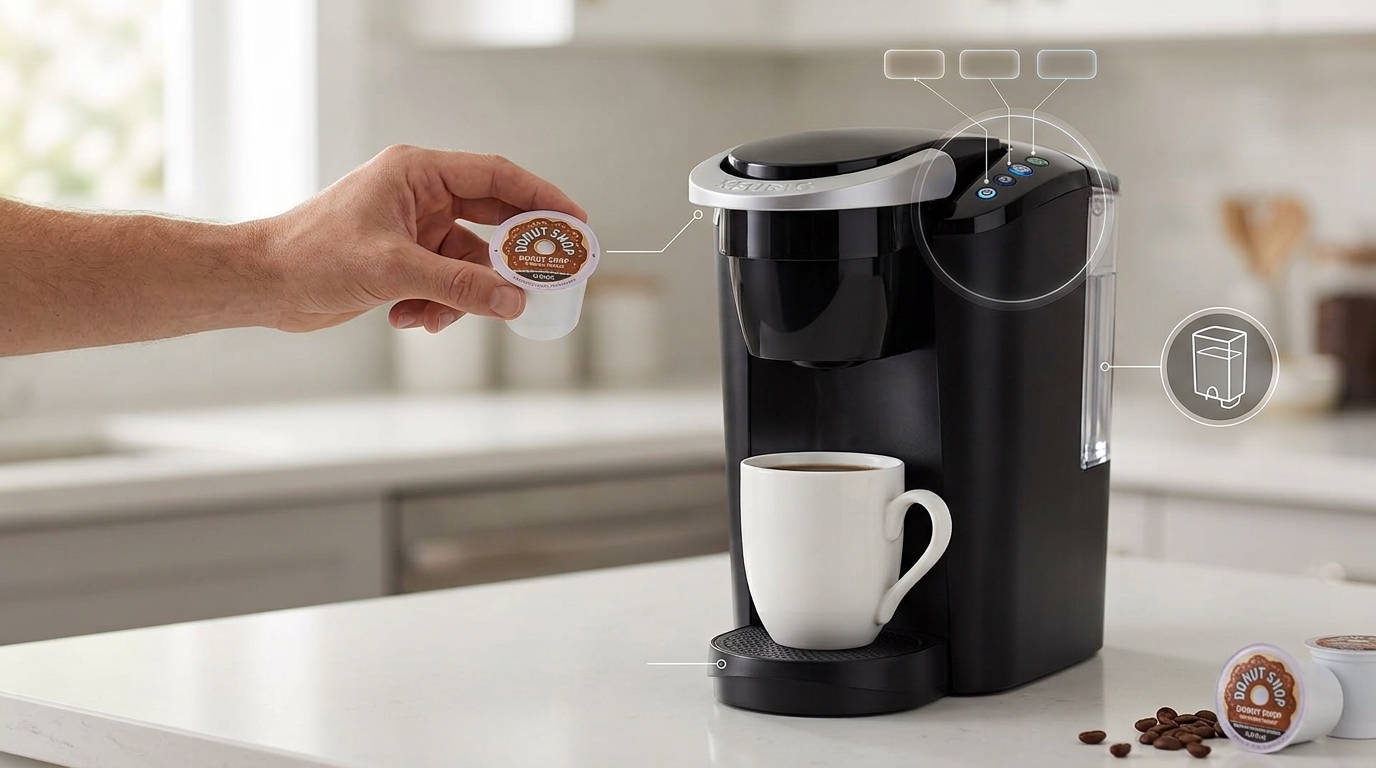
The Keurig K-Compact is designed as an entry-level single-serve coffee maker within the Keurig product ecosystem. Understanding its actual features—rather than relying on marketing language—helps clarify what it does well and where it might fall short for certain users.
Brew Size Options
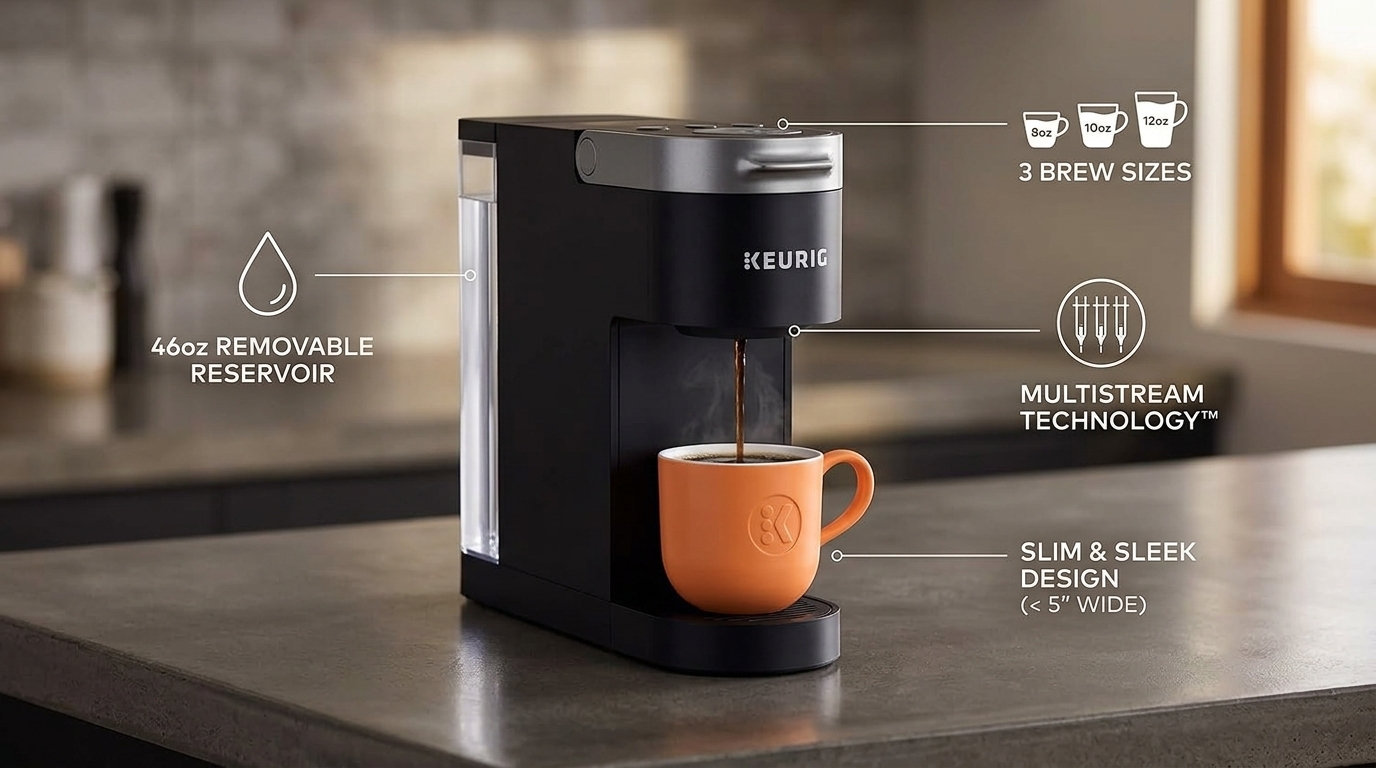
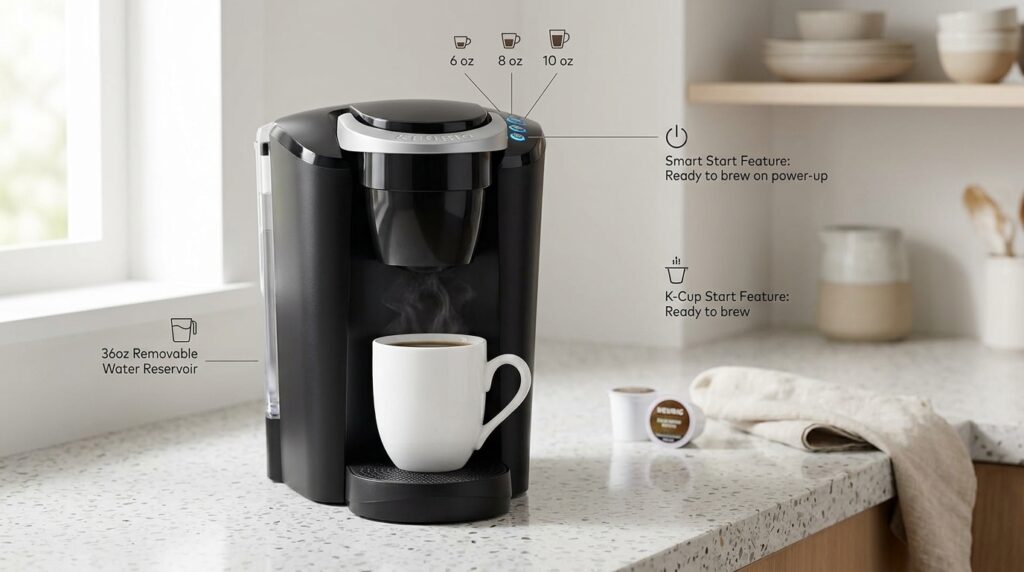
The machine offers three brewing options: six, eight, and ten ounces. This flexibility allows users to brew different quantities depending on their needs. Someone grabbing a quick coffee before rushing out the door might choose the smaller size, while someone settling in for an extended work session might opt for the full ten ounces. The middle option at eight ounces typically corresponds to a standard coffee cup size.
This graduated approach matters more than it might initially appear. Rather than being locked into a single serving size, users can adapt the machine to different occasions and preferences. A smaller cup might be appropriate in the morning, while a larger brew suits evening work sessions better.
Smart Start Feature
The Smart Start feature enables the machine to begin heating water when the user presses the brew button, rather than requiring the machine to heat up from a cold state. For users accustomed to waiting several minutes for traditional coffee makers to preheat, this functionality streamlines the morning routine. The water reaches brewing temperature relatively quickly, reducing the time between deciding you want coffee and actually having it in hand.
It’s worth noting that this feature assumes the machine maintains some residual heat between uses. On machines left inactive for extended periods, or in very cold environments, the warm-up time might still be noticeable, though generally faster than if the machine needed to heat cold water completely from room temperature.
Reservoir Size and Refilling
The removable thirty-six ounce reservoir holds enough water for approximately three to four brewing cycles, depending on the size selected. This capacity means users don’t need to refill the water tank after every single cup, which reduces daily maintenance requirements.
The removable design proves practical for refilling. Rather than pouring water into a tank mounted to the machine, users can detach the reservoir, carry it to the sink, fill it, and replace it. This approach works particularly well in office environments or situations where the coffee maker sits on a shelf away from the nearest water source.
The reservoir’s size does create a tradeoff: it’s large enough to be genuinely useful, but not so massive that it consumes excessive counter space. For people working in smaller kitchens or apartments, this moderate capacity represents a reasonable balance.
Compact Footprint
The name “K-Compact” accurately reflects the machine’s actual dimensions. It’s designed to fit within tighter spaces compared to full-size Keurig models or traditional coffee makers. For apartment dwellers, office workers with limited desk space, or anyone prioritizing counter real estate, this compact design becomes a meaningful practical consideration rather than merely a marketing angle.
Understanding How Single-Serve Pod Brewing Works
To fully appreciate what the K-Compact does, it helps to understand the mechanics of K-Cup brewing itself.
Each K-Cup pod is a sealed, single-serving container holding ground coffee (typically between nine and twelve grams depending on the specific blend) along with a paper filter. When you place a pod in the machine and press brew, the following sequence occurs:
First, the machine punctures the bottom of the pod. Then, hot water—heated to approximately 192 degrees Fahrenheit—is forced through the coffee grounds and paper filter at pressure. This hot water extracts flavors, oils, and caffeine from the grounds as it passes through, and the brewed coffee drains into your cup below.
The entire process typically takes between one and two minutes from pressing the button to having a full cup of coffee. This speed derives largely from the pre-ground nature of the coffee and the relatively small volume being brewed.
This is notably different from pour-over methods, where manually pouring water allows more control over brewing time, or espresso machines, which use significantly higher pressure to extract concentrated shots. The K-Cup system occupies its own niche in the coffee preparation spectrum.
Practical Usage Scenarios
Different people have different needs from their coffee makers, and examining realistic use cases helps clarify whether single-serve brewing aligns with actual daily routines.
The Solo Household
Someone living alone represents perhaps the most straightforward use case for single-serve machines. Traditional drip coffee makers typically brew four to twelve cups at once. For a solitary person, this creates waste—either throwing out stale coffee or committing to drinking multiple cups whether desired or not.
A single-serve machine allows that person to brew exactly one cup of fresh coffee without waste. If they drink coffee two or three times daily, they’re brewing fresh coffee each time rather than reheating yesterday’s pot.
Households with Varied Preferences
Families or roommate situations often involve people with different coffee preferences. One person might prefer strong dark roasts while another enjoys lighter blends. Someone might want decaf in the evening while others drink regular coffee regardless of time. A traditional coffee maker brewing one large pot accommodates none of these preferences well.
Single-serve brewing allows each person to select their preferred pod before brewing. Family members aren’t stuck sharing one pot brewed to someone else’s preferred strength or style.
Hectic Mornings
In households where people leave for work or school at different times, single-serve brewing offers practical advantages. Rather than coordinating coffee brewing so that a full pot finishes just as the first person needs to leave, each person can brew on their own schedule.
Someone waking up early for a commute can have their coffee ready within a couple of minutes. Someone sleeping in an extra hour isn’t stuck reheating yesterday’s pot or brewing an entire new pot just for themselves.
Office and Workplace Settings
Many offices now feature single-serve coffee stations in break rooms. Individual employees can brew according to their own timing and preferences without negotiating coffee preparation with coworkers. Someone might brew a first cup at nine in the morning, another at mid-afternoon, and no coordination with others is required.
Limited Kitchen Space
Apartments, dorm rooms, and other compact living spaces often have minimal kitchen infrastructure. A single-serve machine can sit on a small counter, shelf, or even a desk. This works well for people whose coffee needs exceed what they can satisfy with instant coffee or a manual pour-over device, but who lack space for a full-size coffee maker.
Who Might Find This Approach Suitable
Beyond specific scenarios, certain characteristics align well with single-serve coffee brewing in general, and the K-Compact specifically.
People who value convenience and speed. If your morning coffee is one part of a busy routine rather than a meditative ritual, the quick brew-and-go nature of pod coffee appeals. You’re not standing over a pour-over carefully controlling water temperature and pouring technique. You’re pressing a button and waiting less than two minutes.
Those with varied taste preferences. Anyone living with others who drink coffee differently, or who themselves prefer different types of coffee at different times, benefits from the flexibility of pod selection. Trying new roasts or origins means buying individual boxes of different pods rather than committing to five pounds of one type of bean.
Individuals prioritizing minimal cleanup. Brewing leaves no wet grounds to dispose of or filter to rinse. You simply remove and discard the used pod. For people who find traditional coffee maker maintenance off-putting, this reduction in cleanup friction matters.
Limited-space living situations. Whether temporary (student housing) or permanent (apartment living), compact footprints are genuinely valuable when counter space comes at a premium.
People seeking consistency. Pod coffee brewing produces similar results repeatedly. The machine’s automation means brewing parameters remain constant. If you prefer knowing your morning coffee will taste the same as yesterday’s, this consistency appeals.
Important Considerations Before Choosing Single-Serve Brewing
While single-serve coffee makers offer clear advantages for many situations, several practical and philosophical considerations deserve attention.
The Pod Consumption and Waste Factor
Each cup of coffee requires one K-Cup pod. Over time, this generates waste. A person drinking one cup daily produces roughly 365 pods annually. While the pods are recyclable in many areas (though this requires specific handling), most end up in landfills.
For environmentally conscious consumers, this represents a genuine concern. Some people mitigate this by using reusable pod filters filled with their own ground coffee, though this requires additional purchasing and somewhat diminishes the convenience advantage of pre-packaged pods.
Cost Comparison to Other Methods
K-Cup pods typically cost between fifty cents and a dollar per pod depending on the specific blend and where they’re purchased. Over a year, a single-cup-daily habit costs roughly one hundred eighty to three hundred sixty dollars just for the coffee itself.
This compares to traditional drip coffee, which might cost thirty to fifty cents per cup (based on bulk bean purchases and brewing full pots), or pour-over manual brewing, which has similar per-cup economics. However, it compares favorably to purchasing daily coffee from cafes, which typically costs three to five dollars per cup.
Coffee Quality and Flavor Profile
Single-serve pod coffee is convenient, but it doesn’t represent the cutting edge of coffee quality. The ground coffee in pods has been ground and sitting in a sealed environment, sometimes for weeks or months. Coffee enthusiasts generally prefer freshly ground beans, arguing that whole beans preserve aromatic compounds and oils better than pre-ground coffee.
That said, this doesn’t mean pod coffee tastes bad. For people without strong preferences about coffee flavor nuances, pod coffee is perfectly acceptable. For coffee professionals or serious enthusiasts, it’s typically seen as a convenience compromise rather than an ideal brewing method.
Water Quality and Mineral Buildup
K-Cup machines work with tap water, and mineral content in tap water can accumulate inside the machine over time. Most Keurig models require periodic descaling—running a cleaning solution through the system to remove mineral buildup. Regular descaling maintains proper function and helps ensure the machine lasts several years rather than degrading rapidly.
This represents an occasional maintenance task that some users find inconvenient, though it’s far less demanding than other types of coffee maker upkeep.
Flavor Variety and Selection
The K-Cup market includes hundreds of different coffee options, representing various roasts, origins, and blends from numerous manufacturers. This abundance means you can experiment with different coffees without committing to large quantities. However, it also means shelf space or cabinet space is needed to store the pods you’re currently rotating through.
Some pod enthusiasts maintain a small collection—perhaps five to ten different varieties—rotating through them based on mood and preference. Others keep a single variety they enjoy on rotation. The flexibility to experiment easily is a feature, though the required storage can be a limitation.
Comparing Single-Serve to Other Coffee Brewing Methods
Understanding where pod brewing sits relative to other approaches helps contextualize its strengths and limitations.
Versus Traditional Drip Coffee Makers
Traditional drip machines brew four to twelve cups simultaneously. They’re inexpensive, reliable, and per-cup coffee cost is lower. However, they generate waste if you don’t consume the entire pot, and they don’t accommodate individual taste preferences well. Drip machines suit households where multiple people want coffee around the same time, but perform poorly for solo drinkers or groups with very different schedules.
Versus Pour-Over and Manual Brewing
Methods like pour-over, French press, or Aeropress put significant control in the user’s hands. You select the beans, control grind size, determine water temperature, and manage brewing time. This flexibility appeals to people who view coffee preparation as part of the enjoyment rather than a chore.
However, manual brewing requires more active participation. You’re standing with a kettle, pouring water carefully, and monitoring the process. It’s slower than pod brewing and less convenient for rushed mornings. It also generates wet grounds that require disposal.
Versus Espresso Machines
True espresso machines produce concentrated shots through pressure brewing. Espresso forms the base for specialty drinks like cappuccinos and lattes. However, espresso machines are expensive, require skill to operate well, and demand regular maintenance and cleaning.
Single-serve pod makers can’t match the quality of good espresso, but they’re also a fraction of the price and infinitely simpler to operate. Someone wanting occasional milk-based drinks might use a single-serve machine with a milk frother rather than committing to espresso equipment.
Versus Instant Coffee
Instant coffee is cheaper and requires even less equipment—just hot water and a mug. However, most people find instant coffee noticeably lower in quality compared to brewed coffee. For people who genuinely enjoy coffee flavor, instant doesn’t satisfy. Single-serve pod machines represent a better option if you prioritize both convenience and actual coffee quality.
Practical Features Worth Understanding
Beyond the main specifications, several practical aspects of the K-Compact’s design merit attention.
The drip tray. The machine includes a removable drip tray that catches excess water. This is essential if you’re using the machine on furniture or surfaces where spills matter. The removable design allows you to empty water if the machine drips between uses or occasionally overflows.
The pod puncturing system. The machine automatically punctures both the top and bottom of the K-Cup pod during brewing. This automation is reliable, though occasionally a pod might not puncture properly, resulting in either weak coffee or water flowing around the pod. It’s rare, but understanding this small possibility is realistic.
The hot water supply. Once the machine heats water, it delivers that heat for several hours before cooling down. This means if you brew in the morning, a cup brewed mid-afternoon will heat up faster than if the machine sat unused overnight. The timing of your coffee consumption affects heating duration required.
Compatibility with K-Cup pods. The machine works with standard K-Cup pods from numerous manufacturers. You’re not locked into a single brand or supplier. This creates price competition and flavor variety.
Maintenance and Longevity
Like any appliance, the K-Compact requires basic maintenance to continue functioning properly.
Descaling every three to six months (depending on water hardness in your area) prevents mineral buildup. Most manufacturers provide descaling solutions, or white vinegar works as an alternative. The process involves running the solution through the machine as if brewing, then running fresh water through multiple brew cycles to rinse.
Beyond descaling, the drip tray should be emptied and cleaned regularly. The reservoir, being removable, can be rinsed thoroughly. These tasks are straightforward and don’t require special tools or knowledge.
With proper maintenance, single-serve Keurig machines typically last three to five years, though some users report longer lifespans. The sealed nature of the brewing system means fewer components are exposed to wear compared to machines where water sits in open reservoirs.
Frequently Asked Questions
How long does the water stay hot if I don’t brew anything?
Most single-serve machines stay warm for several hours after the last brew. If you brew in the morning and want another cup at lunch, you won’t need to wait for heating. However, if the machine sits overnight, it cools completely and requires heating time for the next morning’s first brew.
Can I use any K-Cup pod, or only specific brands?
Standard K-Cup pods work across all Keurig machines. You’re not limited to any single brand. Many companies produce compatible pods, creating a competitive market with various price points and flavor options.
What’s the difference between various K-Cup varieties?
K-Cups come in different roast levels (light, medium, dark) and from different origins (Brazilian, Ethiopian, Colombian, etc.). Some are decaffeinated. Flavor intensity varies. The variety allows experimentation and preference matching.
Is descaling absolutely necessary?
Descaling maintains optimal brewing performance and machine longevity. In areas with very soft water, descaling might be needed less frequently. In hard water areas, regular descaling prevents mineral buildup that slows heating and affects brew quality.
Can I brew larger quantities for multiple people?
The K-Compact brews one cup at a time, maximum ten ounces. If you need coffee for multiple people simultaneously, you’d need to brew sequential cups, which takes time. This is a genuine limitation if you regularly need simultaneous multi-cup brewing.
Do these machines use much electricity?
Single-serve machines use electricity only when heating water, which is relatively brief. They consume less electricity than traditional drip machines that maintain heated water in a large reservoir. Most single-serve machines use between 1,500 and 1,600 watts during heating.
What if a pod doesn’t puncture properly?
Occasionally, a pod might not puncture fully, resulting in weak coffee or overflow. Removing the pod and restarting usually resolves the issue. If this happens frequently, it might indicate a mechanical problem requiring service.
How does water temperature affect brewing?
K-Cup machines heat water to approximately 192 degrees Fahrenheit, optimal for extracting coffee flavors without scorching the grounds. Users can’t adjust this temperature. For people wanting variable temperature control, this represents a limitation.
Can I make other beverages besides coffee?
K-Cup pods are available for hot chocolate, tea, and other beverages, though coffee remains the dominant option. The machine itself simply heats and forces hot water through whatever is in the pod, so technically any compatible pod works.
What should I do if the machine stops heating properly?
This usually indicates mineral buildup requiring descaling. Running a descaling cycle often restores proper heating. If descaling doesn’t resolve the issue, the heating element might need professional service or replacement.
Conclusion
The Keurig K-Compact represents a straightforward approach to single-serve coffee brewing. It prioritizes simplicity and compactness over advanced features, making it approachable for people new to single-serve brewing. The three brew sizes accommodate different cup preferences, the removable reservoir reduces daily refilling needs, and the overall footprint suits compact living spaces.
Like any coffee brewing method, single-serve pod brewing involves tradeoffs. The convenience and speed come at the expense of higher per-cup coffee costs and environmental considerations related to pod waste. The consistent, automated brewing is simpler but offers less control than manual methods for people who value hands-on preparation.
Whether this approach makes sense depends on individual priorities. For someone living alone, managing a busy schedule, or prioritizing convenience over cost and environmental concerns, single-serve brewing aligns well with practical needs. For coffee enthusiasts, people serving multiple people simultaneously, or those prioritizing environmental impact, alternative brewing methods might prove more suitable.
The K-Compact itself is competently designed within its category. It does what it’s intended to do without unnecessary complexity. It’s neither revolutionary nor deficient—it’s a functional option in an established product category.
Understanding your actual brewing needs, daily routine, and priorities helps determine whether single-serve brewing generally makes sense for you, and whether a compact model like this one fits your specific situation better than alternatives.