
Introduction
The way people brew coffee at home has evolved dramatically over the past two decades. What was once a straightforward choice between a traditional drip machine and a French press has expanded into numerous brewing methods, each with its own set of advantages and considerations. Single-serve coffee systems have become particularly popular in recent years, partly because they address real challenges that many households face: the desire for convenience, the need to accommodate different coffee preferences within one household, and the practical concern of not wasting coffee when only one person wants a cup.
The Keurig K-Slim represents one approach to this market segment. Understanding whether this machine aligns with your household’s needs requires looking beyond surface-level marketing and exploring what the machine actually does, how it functions, and what role it might play in your daily routine. This article examines the K-Slim’s design, features, and practical applications to provide a comprehensive look at what prospective users should know.
Understanding Single-Serve Coffee Systems
Before diving into the specifics of the K-Slim, it’s worth understanding the broader context of single-serve brewing. These systems operate on a fundamentally different principle than traditional coffee makers. Instead of brewing a full pot, they prepare individual cups by forcing hot water through a pre-measured amount of coffee grounds contained in a pod or capsule.
The appeal of this approach is straightforward: if you live alone or with people who drink coffee at different times, you’re not stuck choosing between brewing an oversized pot that goes to waste or manually preparing individual cups throughout the day. From a practical household perspective, this addresses a real problem that many people encounter.
However, this convenience comes with trade-offs worth considering, including packaging waste, the cost-per-serving comparison with traditional methods, and questions about whether the coffee quality matches what you might achieve through other brewing techniques. A realistic evaluation requires acknowledging both the genuine conveniences and the legitimate drawbacks.
Key Features of the K-Slim
Compact Footprint and Design Considerations
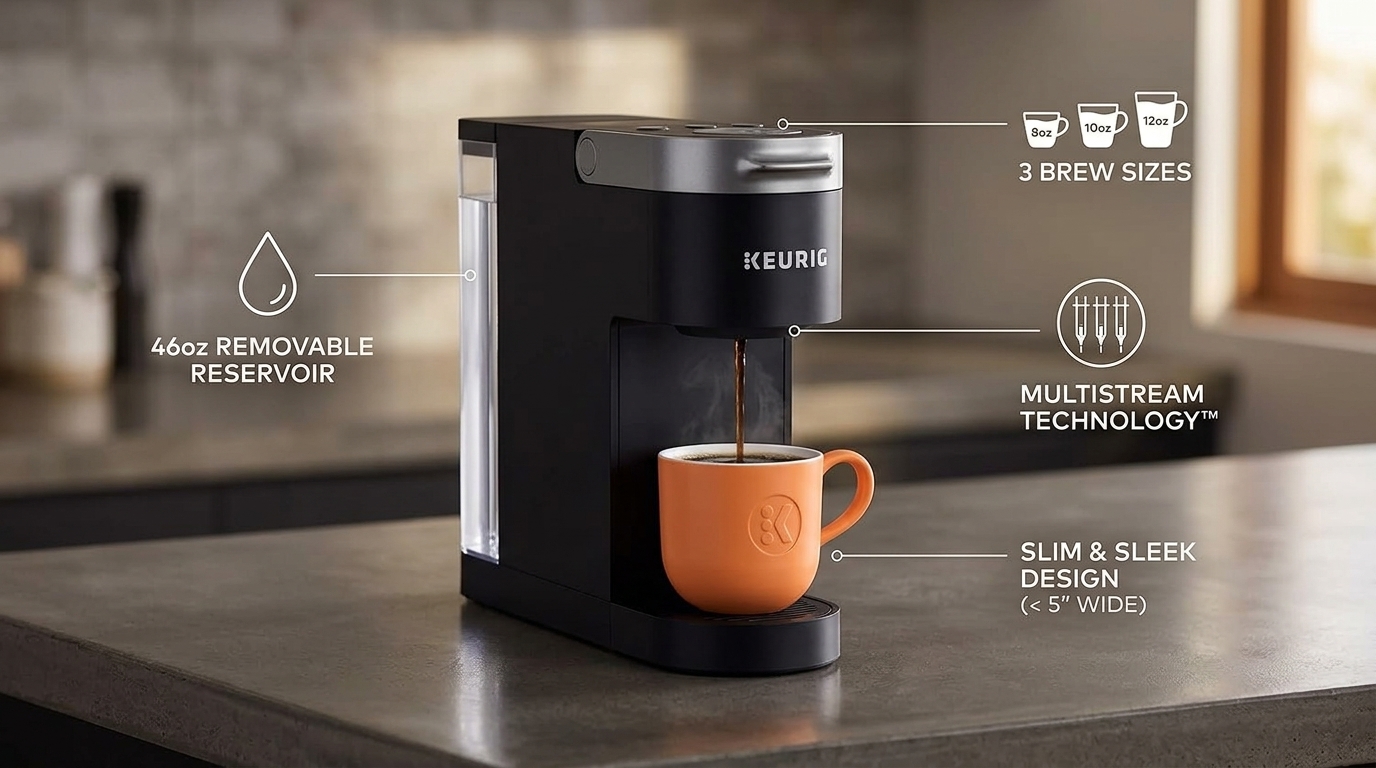
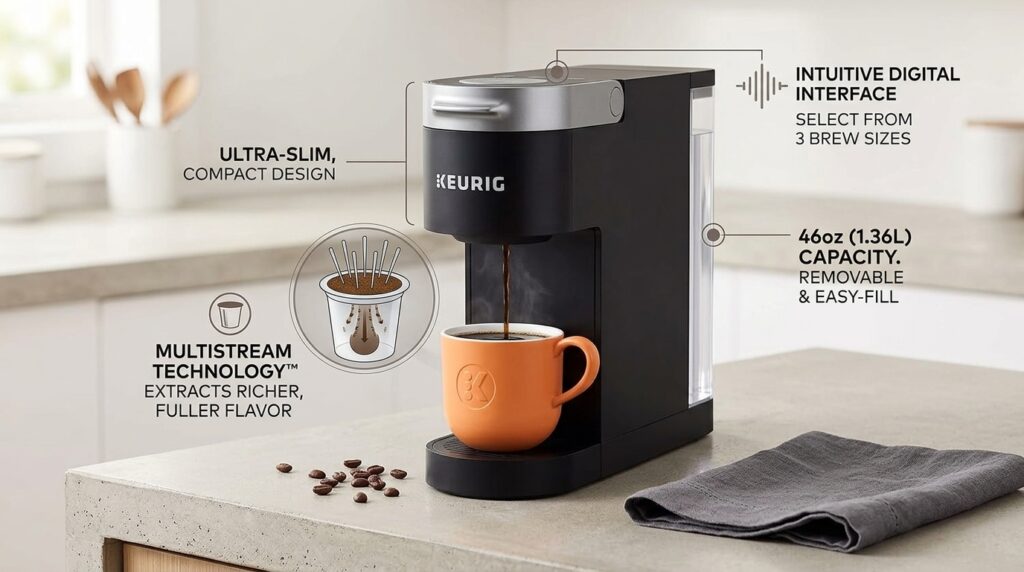
One of the most immediate observations about the K-Slim is its physical profile. The machine is designed to occupy less counter space than many full-size coffee makers. For people living in apartments, smaller kitchens, or homes where counter real estate is genuinely limited, this compact design addresses a practical constraint rather than just being an aesthetic preference.
That said, “slim” is a relative term. The machine still requires adequate space for water refilling and pod insertion. Understanding your actual counter dimensions and access patterns is more useful than simply knowing the machine is narrower than alternatives. If your counter space is genuinely cramped, measure the actual dimensions rather than relying on descriptions.
The black finish mentioned in the product specifications is a neutral choice that tends to blend into most kitchen environments. It doesn’t necessarily look premium or dated—it’s simply functional and practical. The industrial design is straightforward without attempting to be particularly trendy or decorative.
The 46-Ounce Removable Reservoir
The water reservoir’s capacity and removability are practical features worth examining. A 46-ounce capacity means you can brew several cups before needing to refill, depending on brew size selection. This is genuinely convenient if you’re making multiple cups in succession or if the machine sits in a location where frequent refilling would be inconvenient.
The removable design is standard across most modern coffee makers at this price point, but it’s worth noting because it affects maintenance. A removable reservoir means you can clean it separately, which is more thorough than machines with permanently integrated water tanks. For people concerned about water quality or who have mineral-heavy tap water, this accessibility is a genuine advantage.
Multistream Technology and Brew Consistency
The Multistream Technology is worth understanding in concrete terms rather than as marketing language. This feature involves how water is distributed over the coffee grounds during brewing. The technology uses multiple spray patterns to ensure that water contacts the grounds more evenly throughout the brewing process.
In practical terms, this can affect brew consistency and extraction. When water distributes unevenly over grounds, some areas over-extract while others under-extract, potentially resulting in an unbalanced cup. More even distribution theoretically produces a more consistent result. Whether you’ll actually perceive a meaningful difference depends on your palate’s sensitivity to such variations and what you’re comparing it against.
This isn’t a minor detail, but it’s also not a feature that transforms the entire coffee experience. It’s a legitimate engineering consideration that affects the final cup, but it functions within the inherent limitations of pod-based brewing systems.
Three Brew Size Options
The ability to select between different brew sizes is a practical feature that accommodates different circumstances. A smaller brew might be appropriate for a quick morning cup before work, while a larger size might suit someone settling in for reading or working from home.
The specific size options available (typically ranging from smaller to medium-large cups) mean the machine can adapt to different occasions within a single household. However, it’s worth noting that pod-based systems have inherent limitations on how much flexibility you have—you’re still constrained by the coffee amount in the pod and the brewing method itself.
How the Machine Functions: A Practical Overview
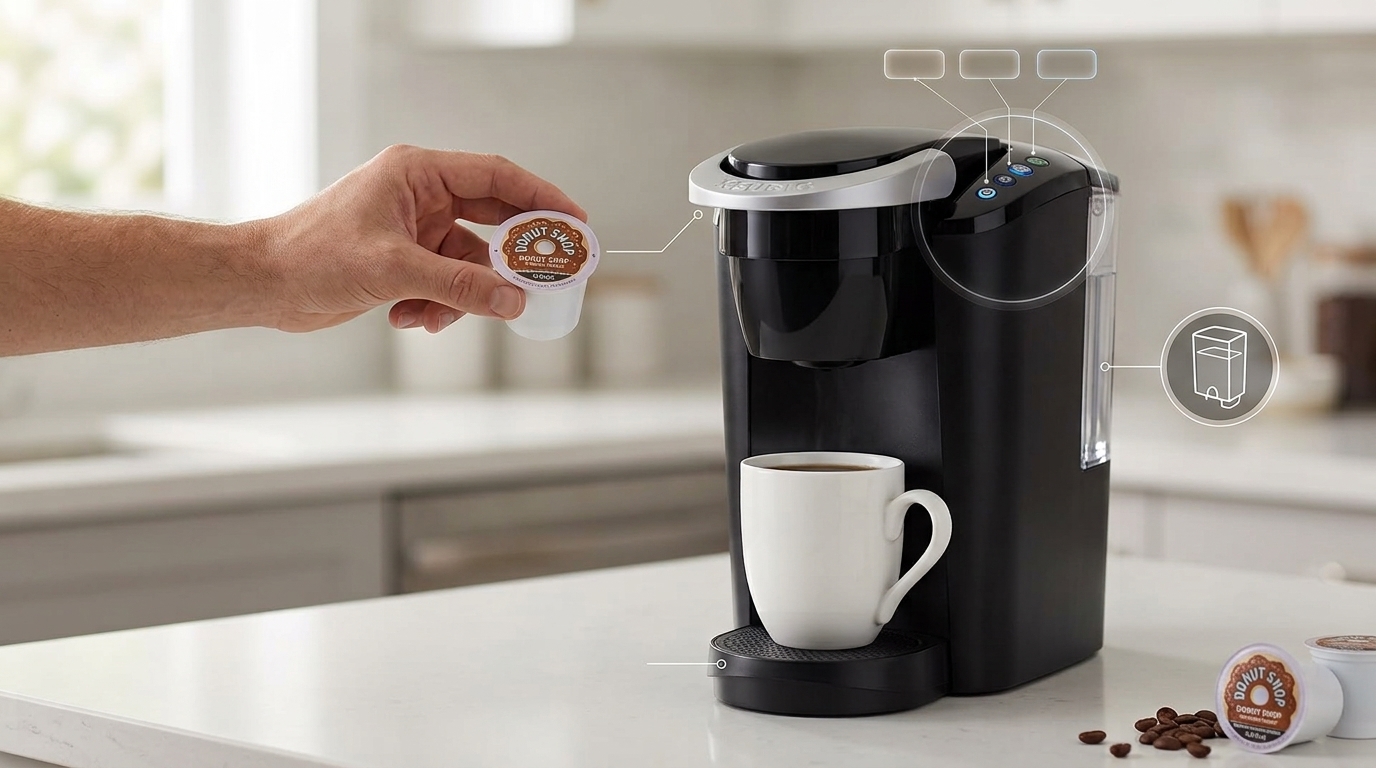
The operational process for the K-Slim follows a straightforward sequence. You fill the reservoir with fresh water, insert a K-Cup pod into the designated opening, select your desired brew size, and initiate the brewing cycle. The machine heats the water and forces it through the pod, dispensing the brewed coffee into your cup.
The machine reaches brewing temperature fairly quickly relative to traditional drip machines. For someone juggling morning routines, this speed can be genuinely useful. The absence of a carafe means there’s no sitting around keeping coffee warm on a hot plate, which also means the coffee isn’t subject to the temperature degradation that occurs with traditional drip systems over time.
Cleanup is relatively minimal compared to traditional filter-based brewing. There’s no filter to dispose of (the pod serves that function), no carafe to wash, and no mess from grounds scattered across a filter basket. You remove the used pod, rinse the reservoir occasionally, and you’re done. For people who prioritize convenience in their morning routine, this matters.
Practical Usage Scenarios
Household Dynamics and Multiple Coffee Preferences
Many households include people with different coffee preferences. One person might prefer a strong, bold brew while another enjoys something milder. Someone in the household might drink decaffeinated coffee exclusively, while another person needs their full-caffeine morning routine.
A single-serve system addresses this reality in a way that traditional full-pot brewers struggle with. Each person can prepare exactly what they prefer without negotiation or waste. If you’re currently stuck either making concessions about coffee strength or manually managing multiple brewing methods, a system like the K-Slim offers genuine practical value.
Variable Schedule Patterns
Modern households often don’t operate on synchronized schedules. One person might need coffee at 6 AM for an early shift while another doesn’t wake until 8 or 9. A single-serve system means both people can have freshly brewed coffee at their preferred time without anyone else needing to maintain a traditional coffee maker or reheat cold coffee.
This applies equally to people who work from home and might want coffee at unusual times, or households with shift workers. The machine’s ready availability for individual cups throughout the day accommodates these real variations in modern life.
Limited Space Situations
Urban apartments, small kitchens, or shared housing situations often mean that kitchen real estate is genuinely limited. In these contexts, a compact machine that delivers coffee functionality without consuming significant counter space represents a practical solution rather than just an aesthetic choice.
Who Might Find This Machine Suitable
Single-Person Households
Someone living alone faces a genuine dilemma with traditional coffee makers: brew a full pot and watch most of it go to waste, or manually brew individual cups throughout the week. A single-serve system eliminates this choice entirely. Each morning, you brew exactly one cup, with no waste and no stale coffee sitting around.
Small Households with Varying Sleep Schedules
Couples or small families where people wake at different times benefit from the ability to brew individual servings without disturbing others or requiring someone to maintain a full pot. This accommodation of different schedules is a genuine convenience factor.
Offices and Shared Workspaces
While the K-Slim is designed for home use, similar single-serve machines are popular in office settings. If you spend significant time in an office that either lacks decent coffee options or where you prefer your own brew to shared communal machines, a compact single-serve system is worth considering.
People Transitioning Away from Pod Systems
It might seem contradictory, but some people actually use machines like the K-Slim as a step toward reducing their reliance on pod-based coffee. Having one machine available for convenience doesn’t prevent you from also using a French press, pour-over, or espresso setup for times when you want to invest more attention in brewing. This hybrid approach can feel more sustainable than committing entirely to pod-based brewing.
Important Considerations Before Purchasing
Pod Availability and Ecosystem
The K-Slim uses standard K-Cup pods, which are widely available through numerous retailers and online sources. This availability is genuinely useful, but it’s worth understanding the cost implications. Pod-based brewing typically costs more per cup than traditional drip coffee or even espresso machines, depending on your pod selection.
Additionally, the variety of available pods—from basic coffee to flavored options to other beverages—is extensive. However, if you have specific preferences or use specialty beans, the pod ecosystem might not accommodate them perfectly. You’re somewhat committed to whatever coffee companies choose to offer in pod form.
Waste Considerations
Single-serve pods generate plastic waste, which is a legitimate environmental consideration. Some pods are recyclable or compostable, but this requires sorting them properly and having access to the right facilities. If environmental impact is a significant factor in your decision-making, it’s worth acknowledging this trade-off explicitly rather than ignoring it.
Long-Term Durability and Maintenance
Like any electrical appliance, the K-Slim has a service life. Parts can wear out, and repairs might eventually cost more than replacement. The water line connections, heating elements, and pump components are standard points where machines can develop issues over time. Checking warranty information and understanding what components are covered matters more than assuming the machine will function indefinitely.
Regular descaling with appropriate solutions helps maintain performance by preventing mineral buildup from hard water. This isn’t a major undertaking, but it’s a maintenance task that requires occasional attention rather than being completely hands-off.
Brew Quality Expectations
The Multistream Technology helps with consistency, but it’s worth maintaining realistic expectations about what a single-serve pod system can achieve compared to other brewing methods. Dedicated coffee enthusiasts often prefer pour-overs, French presses, or espresso machines because they allow more control over brewing variables like temperature, grind size, and extraction time.
That said, a well-made cup from the K-Slim is perfectly acceptable for people who want good coffee without significant investment in technique or equipment. The question isn’t whether pod-based coffee is objectively “good”—it’s whether it matches your personal preferences and priorities.
Comparing Single-Serve Systems with Other Brewing Methods
Single-Serve Pods Versus Traditional Drip Machines
Traditional drip coffee makers have been the standard for decades, and they persist because they offer genuine value for certain situations. A full-size drip machine produces multiple cups efficiently and typically has a lower cost-per-cup than pod-based systems. If you regularly brew multiple cups at once, a traditional machine is likely more economical.
However, if you’re regularly watching coffee go stale or throwing away quarter-full pots, the economics shift. Single-serve systems reduce waste in low-volume drinking situations. The comparison ultimately depends on your actual consumption patterns rather than theoretical averages.
Single-Serve Pods Versus Manual Brewing Methods
Pour-overs, French presses, and similar manual methods offer more control and often produce excellent coffee. They also typically cost less per cup and generate minimal packaging waste. The trade-off is involvement—you’re actively participating in the brewing process, which some people enjoy and others find inconvenient.
The K-Slim represents a different point on the convenience-versus-involvement spectrum. It’s more convenient than manual methods but less engaged than someone who wants hands-on control over their brewing process.
Single-Serve Pods Versus Espresso Machines
Espresso machines create an entirely different beverage category and require significant learning and practice to use well. They’re also substantially more expensive and take up more counter space. They’re worth mentioning because someone specifically interested in espresso drinks rather than regular brewed coffee would be looking at a different category entirely.
Common Questions About the K-Slim
How much counter space does the machine actually require?
Beyond the physical dimensions of the machine itself, you need adequate clearance above for pod insertion and cup placement. Measuring your specific counter area and the height clearance above it matters more than general descriptions. If your counter is already crowded, confirm that the machine fits comfortably in the intended location.
Can you use the machine with reusable pods instead of disposable K-Cups?
The K-Slim is designed for standard K-Cup pods. Reusable pod options exist, though they typically require filling with ground coffee and work with varying degrees of success depending on grind consistency and pod design. If reducing packaging waste is a priority, investigating reusable options is worth doing, but they’re technically a workaround rather than intended functionality.
What’s the actual cost difference between pod-based coffee and traditional methods?
This varies based on pod selection, where you purchase them, and what traditional method you’re comparing against. Pod-based coffee generally costs more per cup than bulk-purchased whole beans for traditional brewing, but the difference fluctuates. Comparing your current coffee spending to projected pod costs using your actual preferred pod selections gives you a more accurate picture than general estimates.
How long does the machine take to brew a cup?
Brewing time is typically under five minutes from machine startup to finished cup, with the actual brew cycle itself lasting just a minute or so. This speed is genuinely useful in morning routines, though it’s not substantially faster than modern drip machines—just more immediate because it’s on-demand rather than a scheduled pot.
Is the reservoir cleaning as straightforward as described?
Removable reservoirs are straightforward to clean by rinsing with water. Occasional deeper cleaning with diluted white vinegar or dedicated descaling solutions helps with mineral buildup, particularly in hard water areas. This maintenance isn’t complicated, but it’s a recurring task rather than something you do once and forget about.
Contextualizing the K-Slim in Your Coffee Routine
The decision about whether the K-Slim makes sense for your household isn’t really about whether it’s objectively “good”—it’s about whether its particular combination of features and trade-offs aligns with your specific situation.
If you live alone and watch coffee go stale regularly, a single-serve system addresses a real inefficiency in your current routine. If you share your household with people who have different coffee preferences and schedules, the flexibility matters. If counter space is genuinely limited, the compact size solves a real problem.
Conversely, if you regularly brew large quantities of coffee, have strong preferences about bean selection, or prioritize minimizing packaging waste, a different approach might align better with your values and practices.
The most useful way to think about this machine is as a practical appliance that solves specific problems rather than as an ideal solution to coffee-making in general. Is it useful for situations it was designed for? Yes. Is it the only reasonable way to make coffee? No. Does it fit your particular circumstances? That’s the actual question worth answering.
Conclusion
The Keurig K-Slim occupies a specific niche in the coffee-making landscape. It prioritizes convenience and accommodation of individual preferences over maximum flavor control or cost efficiency. The compact design addresses real space constraints without sacrificing core functionality. The multiple brew size options and Multistream Technology represent legitimate engineering thoughtfulness about how the machine actually functions in use.
For households where it matches the actual usage patterns—variable schedules, different preferences, or limited counter space—it delivers the convenience it promises. For situations where different priorities apply, other approaches might be better suited.
Understanding what the machine genuinely does, how it functions, and whether its particular strengths address your specific needs matters far more than generic endorsements or dismissals. Your actual coffee-making circumstances, household dynamics, and priorities are the most relevant factors in deciding whether this machine makes sense for you.